 1300 650 890
As drivers look for smarter ways to cut fuel costs and emissions without compromising on practicality, hybrid cars and alternative fuel vehicles are starting to dominate their share of the Australian automotive market. More motorists are asking the same question: What are hybrid cars? And the associated costs and benefits from owning one. Combining the benefits of traditional petrol engines, electric motors and battery technology in electric cars, the flexible driving experience suits many modern Australian lifestyles.
“Hybrid” cars are a broad category and the way in which these components work together can vary. Many people are unaware of the different types of hybrid systems, each operating in a unique way. Especially for drivers making the switch from petrol engines, understanding how hybrid cars work can help you make smarter decisions when comparing the best hybrid cars in the market. In Australia, the most common hybrid types include parallel and series hybrids.
The most helpful way to differentiate between hybrid-electric systems is by looking at how the engine and motor drive the car. When comparing parallel and series hybrid cars, the key difference lies in how power travels to the wheels. The distribution of power impacts factors such as fuel efficiency, performance, how often the engine runs and how the car behaves at different speeds.
In this guide, we unpack how series and parallel hybrid types work, outline their key pros and cons, and outline how you can choose the right hybrid system. Car Search Brokers can take the guesswork out of buying a hybrid, helping you secure the right car at the right price.

Close up of a car parked on city street side.
What is a Parallel Hybrid System?
A parallel hybrid system, sometimes referred to as a “power-split” hybrid, is an alternative fuel vehicle where both the petrol engine and electric motor can drive the wheels directly. The “power split” setting means the vehicle can seamlessly switch between the engine and motor, providing a single source of power to the wheels.
At lower speeds, such as in stop-and-go traffic, the electric motor provides immediate torque over the petrol engine making parallel hybrids more efficient. Alternatively, during high-speed or motorway driving, the petrol engine usually kicks on as the primary source when more power is needed. In other situations, both the engine and motor can work simultaneously, giving the system more flexibility to adapt to different driving conditions.
What is Regenerative Breaking?
One of the biggest advantages of alternative fuel vehicles and parallel hybrids is their ability to make the most of regenerative braking – a key feature that recaptures energy otherwise lost to brake heat. Because the electric motor is connected directly to the wheels, the motor is used as a generator to recharge the battery. This energy can then be used to power the vehicle, improving real-world fuel economy. As much as 30% of the energy can be recaptured, giving the system more flexibility to convert the vehicle’s slowing motion into electricity and store it in the battery. This dual function is why the electric motor in a hybrid is frequently called a motor-generator.
Advantages and Disadvantages of Series Hybrids
Advantages
- Better Suited to Varying Speeds: Parallel hybrids handle changes between cruising and acceleration more easily than series hybrids, making them well suited to mixed driving.
- Flexible Power Delivery: Both the petrol engine and electric motor can drive the wheels, either separately or together, allowing the system to adapt to different driving conditions.
- Smaller Battery Required: As the petrol engine can help power the wheels directly, the electric motor and battery don’t have to do all the work.
- Good Highway Efficiency: At higher speeds, the petrol engine can power the vehicle directly, avoiding energy losses from converting fuel into electricity first.
Disadvantages
- More Complex Mechanical Setup: With both the engine and motor linked to the drivetrain, the system can be more mechanically complex than a series hybrid.
- Less Electric-only Driving: Compared to series hybrids or plug-in hybrids, electric-only operation is usually limited to low speeds and short distances.
What is a Series Hybrid System?
A series hybrid on the other hand, operates based on a simple concept: the vehicle is powered by electricity from the battery source. When the battery is depleted or more power is required, the petrol engine activates to power a generator. The generator produces electricity that powers the battery source and electric motors connected to the wheels. A key difference in series hybrids is that petrol engines only power the generators. This means their wheels are not mechanically connected to the engine and remain electrically operated at all speeds.
Series hybrid systems perform best during consistent, steady-speed driving, as the engine can run at its most efficient operating range. However, as everyday driving demands vary widely and involve fluctuating power, the variability in driving conditions creates extra strain on the battery system. This is why series hybrids often rely on higher-capacity battery packs.
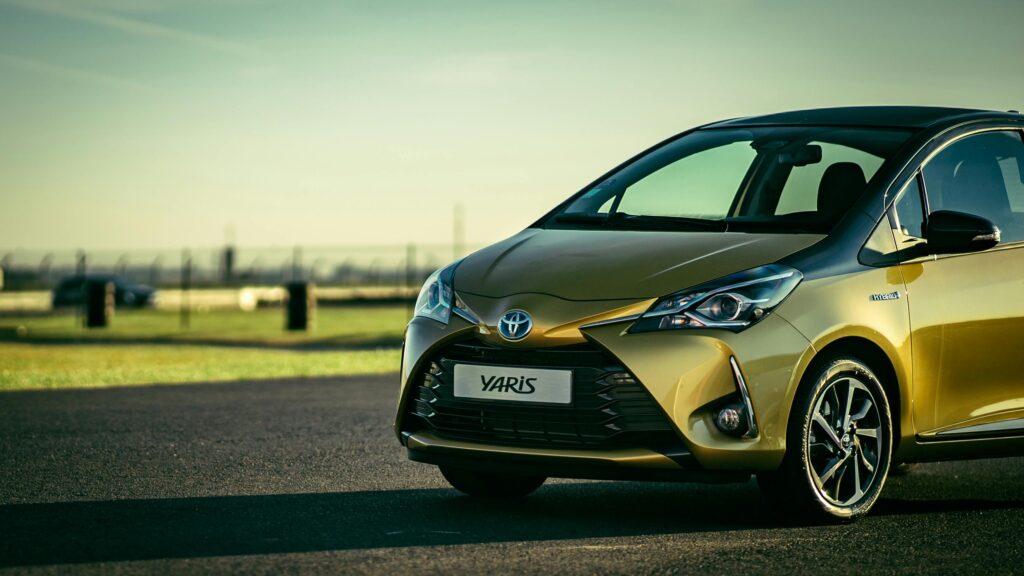
Toyota Yaris Hybrid Parked on the Road
Advantages and Disadvantages of Series Hybrids
Advantages
- Efficient at Steady Speeds: The petrol engine runs at a consistent, efficient operating range, which can improve fuel efficiency during smooth, uninterrupted driving.
- Smooth Electric Driving: As the wheels are powered by electric motors, acceleration is quiet and seamless, similar to an electric vehicle.
- Optimised Engine Operation: The engine is used purely as a generator, allowing it to avoid inefficient low or high rev ranges.
Disadvantages
- Requires a Larger Battery: Since the electric motor does all the driving, series hybrids typically need higher battery capacity than conventional hybrid systems.
- Less suited to Rapid Changes in Power Demand: Real-world driving involves frequent shifts from cruising to hard acceleration, which places more strain on the battery system.
- Less Efficient at High Speeds: As the engine cannot drive the wheels directly, energy must be converted multiple times, which can reduce efficiency in highway conditions.
Looking for EV’s and Alternative Fuel Vehicles?
With so many hybrid and alternative fuel options now available, knowing which one is right for you can feel overwhelming. That’s where Car Search Brokers can help. Our experienced team sources vehicles from a wide network of dealers, provides unbiased advice, and compares fuel efficiency, features and pricing across models to help you make a confident decision.
If you need support finding a car that suits your needs, get in touch with our friendly team today to take the stress out of searching. With over 40+ years of buying and selling new and used cars, call 1300 650 890 or reach out today and Car Search Brokers will find the right hybrid car for you.